One Pan, One Plate, No Apology: Seven Days of Cooking Like You're Worth the Trouble
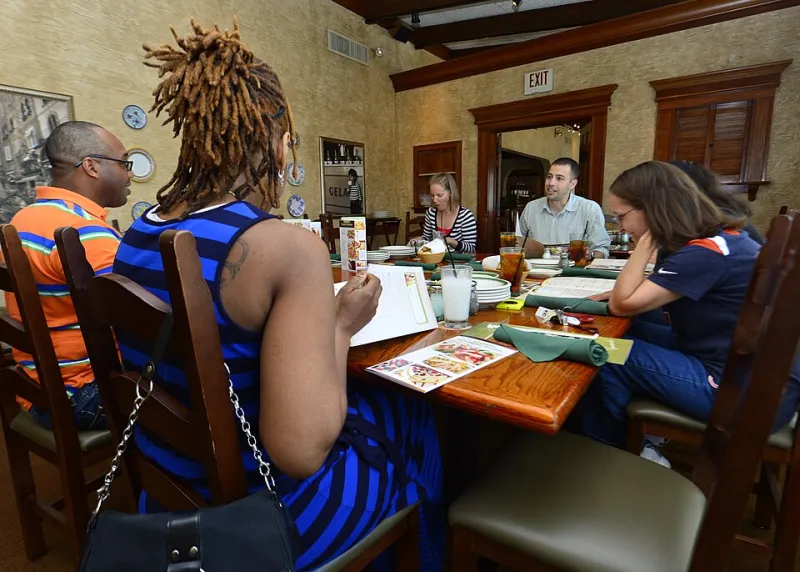
Photo: Airman 1st Class William Johnson, Public domain, via Wikimedia Commons
There is a specific kind of bad dinner that only people who live alone know about. It's the half-recipe. Four ounces of chicken, a third of a zucchini, a saucepan with an inch of soup in the bottom. You eat it standing at the counter in eleven minutes and you're not hungry afterward, exactly. You're just sort of unfed.
The other version is the opposite problem: you cook a full recipe, eat a quarter of it, forget the rest in the back of the fridge, and find it on Saturday with a skin on top.
Both versions come from the same mistaken idea — that cooking for one is cooking for two divided by two. It isn't. It's its own skill, with its own math, and once you get the math, it stops feeling like a waiting room.
Three Cooks Who Quit Halving Everything
Marisol Reyes, 34, is a physical therapist in Denver who lives alone for the first time in her life. For eight months she ate what she calls "assembled food" — crackers, hummus, cheese, an apple cut up on a board. "I told myself it was a girl dinner," she says. "It was a shrug."
Wes Overton is 61, retired, in Dayton, Ohio, six months out from a divorce and relearning a kitchen he'd mostly avoided. He started by making his mother's pot roast for one, which took four hours and produced food for nine. "I ate pot roast until I hated my mother," he says.
Priya Raman, 27, is a night-shift nurse in Richmond, Virginia. Her dinner is often at 9 a.m. "Nobody writes a meal plan for that," she says. "So I made one."
All three landed on the same fix, and it's not portion math. It's this: cook for two, eat for one, and put the second portion in the freezer before you sit down. That's it. That's the whole trick. You get a normal-size cooking project instead of a doll-size one, and you get a future dinner you didn't have to make.
The Seven-Day Plan That Doesn't Insult You
This is built around a single sheet pan, one medium pot, and a freezer that already has some room in it. Every dinner produces one extra portion. By Thursday you're eating Tuesday for free.
Monday — Sheet-pan chicken thigh and chickpeas. One bone-in thigh, one can of chickpeas drained and dried, half an onion in wedges, olive oil, smoked paprika, salt. Roast at 425°F for about 35 minutes. Eat one plate. The second portion becomes Wednesday's lunch with a handful of spinach wilted into it.
Tuesday — Black bean soup, small pot. Half an onion, a garlic clove, a chipotle in adobo, one can of black beans with its liquid, a cup of stock. Simmer twenty minutes, blend half of it. Eat a bowl with a spoon of sour cream. Freeze the rest in two containers. This is the meal that saves you on the night everything goes wrong.
Wednesday — Pasta that isn't a punishment. A hundred grams of pasta. While it boils, sauté garlic and a lot of olive oil, add frozen peas and lemon zest, then the pasta and a splash of the water. Crack an egg yolk into your bowl first and stir the hot pasta over it. Ten minutes, one pan, one bowl.
Thursday — Whatever's-in-the-fridge frittata. Four eggs, leftover roast vegetables, a bit of cheese, in a small oven-safe skillet. Start on the stove, finish under the broiler. Two slices now, two tomorrow.
Friday — The good burger. One patty, cooked in a skillet, on a toasted bun with pickles and too much mustard. Frozen oven fries on the same tray. Priya's rule: "Friday gets a treat, even if the treat is just a bun."
Saturday — Big pot night. A pot of chili, a pot of greens, a pot of dal, whatever your household's big pot is. Eat one bowl. Freeze three.
Sunday — Clean-out-the-fridge fried rice. Cold rice, whatever's left, a hard-fried egg on top. This is where the plan gets its money back.
The Freezer Is Your Second Dinner
The freezer only works if you label things, and the label needs a date and a name you'll recognize at 7 p.m. on a bad day. "Soup — Feb" is a dare. "Chili — eat this" is a plan.
Wes's rule is that nothing goes in the freezer unless it's already in a single portion. He learned this the hard way after freezing a two-gallon tub of pot roast and realizing he'd basically built himself a chore.
The Small Rituals That Aren't Small
Priya eats off a real plate. Not because of aesthetics — because she's a nurse and says she spends her whole shift touching things that belong to other people. "The plate is mine," she says.
Marisol sits down. That's the entire ritual. Chair, table, phone in another room, ten minutes minimum.
Wes lights a candle, which he describes as "deeply embarrassing" and has kept doing anyway.
None of this costs anything, and all three of them say the same thing about it: the ritual is what converts a portion of food into a meal. The food isn't the hard part at the end of a long day. The believing-you're-worth-a-chair part is.
On the Nights You Can't
Some nights there's no plan, no energy, and no interest. Keep three things in the house that require zero decisions: eggs, a bag of frozen dumplings or tortellini, and good bread in the freezer. Toast with butter and an egg is a legitimate dinner. So is cereal, on occasion.
The goal isn't perfection. It's a ratio — most nights, mostly real food, eaten sitting down by a person who bothered. That's the whole transformation. It doesn't arrive in a big moment. It arrives in about the fourth week, when you realize you're looking forward to Tuesday.