Your Dinner Repetition Isn't a Failure. It Might Be the Healthiest Thing You Do.
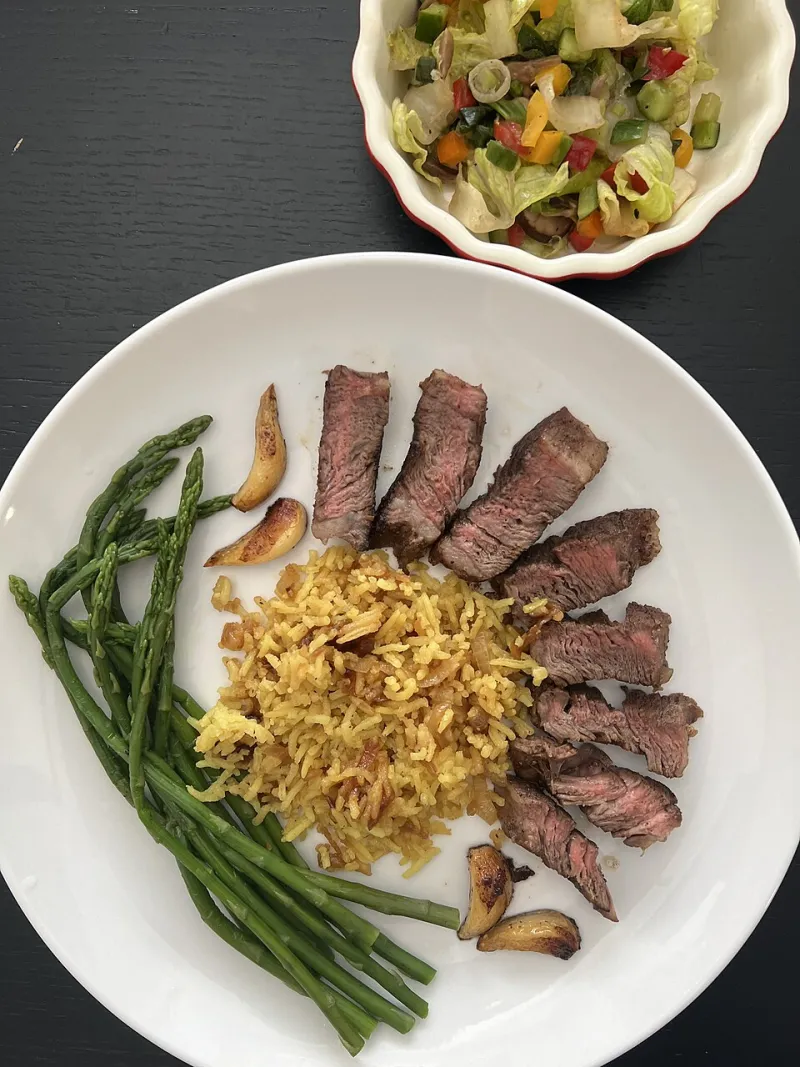
Photo: HaJunkiyada, CC BY-SA 4.0, via Wikimedia Commons
Somewhere along the way, American home cooks absorbed a strange belief: that a repeated dinner is a moral failing. Scroll any food content feed and you'll find it — the 30-minute weeknight rotation, the "we got so BORED with chicken," the gentle shaming of the family that eats taco Tuesday, taco Wednesday, and, God forbid, taco Thursday.
I'd like to make an unfashionable argument: eating the same dinner most nights is not a failure of imagination. For most people, it's one of the smartest, healthiest, most quietly radical things they can do.
The Dad With a Five-Dinner Rotation
Marcus Webb is a father of three in suburban Kansas City with a job that runs until 5:30, a wife who works later, and a rotation of exactly five weeknight dinners: sheet-pan chicken and vegetables, turkey chili, a black bean rice bowl, spaghetti with the sauce his mother taught him, and breakfast-for-dinner on Fridays.
"People hear that and think we're in a rut," he told me. "We're not in a rut. We're in a system."
The system means he shops from a memorized list. It means his 11-year-old can make Tuesday dinner solo. It means zero 5 p.m. decision fatigue — the hour, incidentally, where most American food decisions go to die in a drive-thru lane. "Every dinner I don't have to think about is brainpower I get to spend on my kids," Marcus says. "That trade is not close."
What the Research Actually Says
Dr. Priya Raman, a nutrition researcher who studies dietary habits, isn't surprised by families like the Webbs. "The strongest predictor of diet quality over time isn't variety," she told me. "It's consistency of home cooking. People who repeat a small set of nourishing meals eat more produce, more fiber, and fewer calories from ultra-processed food than people who improvise constantly."
The reason is mechanical, not motivational. Repeated meals let you optimize: you learn the portions that satisfy your household, you waste less, you stop compensating for a mediocre experiment with a snack an hour later. Novelty eating, Dr. Raman notes, tends to come bundled with novelty shopping — the impulse produce that rots in the crisper drawer while the family defaults to something familiar anyway.
There's even a term for the pattern in behavioral nutrition: the "reduced variety diet," long used in clinical weight management precisely because less variety at meals leads to better outcomes. The diet industry sold us variety as virtue. The data shrugs.
The Retiree Who Eats the Same Lunch Every Day and Loves It
Not every repeated meal is about kids or chaos. Frank Delgado, 71, a retired machinist in Tucson, has eaten substantially the same lunch — beans, rice, a tortilla, salsa from his garden — roughly five days a week for a decade.
"People my age get lectured about diet like we're sick," he says. "My doctor asked what I eat. I told her. She said, 'Keep doing that.'"
Frank's repetition isn't poverty or passivity. It's authorship. He spent forty years eating what the shift schedule handed him. Now every lunch is a choice he made once and keeps making on purpose. "Repetition isn't boring if it's yours," he told me. "Boredom is eating something you didn't pick."
The Adventure Tax Nobody Mentions
Here's the part the food-adventure narrative leaves out: novelty is expensive. Not just in dollars — in attention, in waste, in the mental load of planning something new seven times a week. Treating every dinner as a creative assignment is a tax that lands hardest on the people with the least slack: shift workers, single parents, anyone feeding a household on a budget.
Calling repeated meals "boring" is a luxury narrative, and it deserves to be named as one. The person eating the same lentil soup every Tuesday isn't failing at food. She's succeeding at something harder than novelty: feeding herself well, reliably, without drama.
Repeat, But Repeat Well
The honest version of this argument isn't "never try anything new." It's this:
- Build a rotation of five to eight dinners you genuinely like — meals that satisfy, that use affordable ingredients, that you can cook half-asleep.
- Reserve one slot for adventure. A new recipe on the weekend keeps skills sharp and gives the rotation fresh recruits.
- Let repetition compound. The twentieth time you make the chili, it's better than the first. That's not boredom. That's mastery.
- Notice how you feel, not just what you ate. Consistency makes it easier to tell which foods actually treat you well.
Every meal doesn't need to be an adventure. Some meals just need to be dinner — warm, repeatable, and entirely yours. If that's a failure, it's the best kind.