The Last Aisle: What Three Families Learned When Their Supermarket Closed for Good
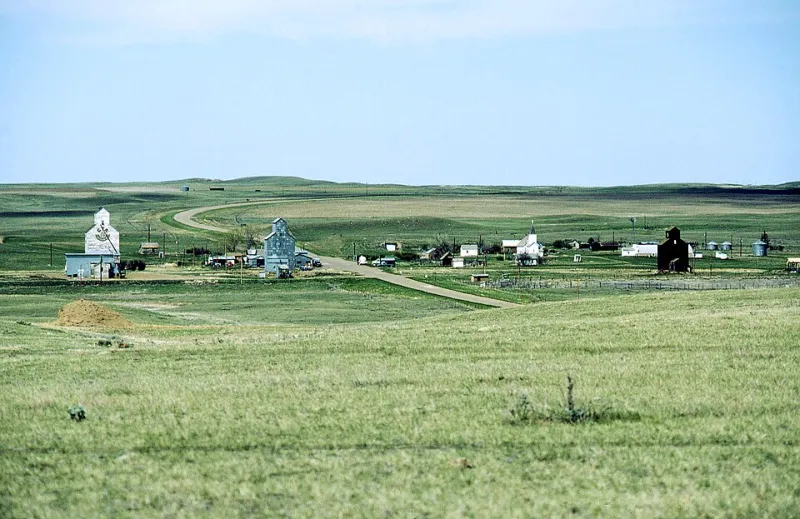
Photo: USDA NRCS Montana, Public domain, via Wikimedia Commons
Miller's Grocery closed on a Tuesday in March, which is a strange day for a town to lose something. Not a weekend, not a holiday. Just a Tuesday, with a sign taped inside the glass that read "Thank you for 41 years" in handwriting nobody in town recognized.
The store sat on the main drag of a southeast Kansas town of about 1,860 people. When it went, so did the meat counter, the small produce section, the pharmacy window in the back, and the reason a lot of neighbors knew each other's names. The nearest full-service supermarket is now 19 miles east — 38 miles round trip on a two-lane highway, past a whole lot of fields.
This isn't a policy piece. It's what three households did next, and what it cost them, and the parts that surprised them.
The First Two Weeks: Casseroles and Denial
Nobody panicked right away. Kansas in early spring is still casserole season, and the church pantry had a decent stock of green beans and cream of mushroom. There was a general assumption that something would open. A dollar store would add coolers. Somebody would buy the building.
By April, the coolers hadn't come. By May, Renee Alvarado had done the math.
"I sat down on a Sunday with a calculator and a receipt and it made me feel stupid," says Alvarado, 44, who drives a school bus and has three kids at home. "I was spending forty dollars a week on the kind of food that doesn't really make a meal. Canned ravioli. Crackers. Stuff that fills a kid up for about ninety minutes."
She figures the round trip to the supermarket costs her a tank of gas she doesn't always have and a Saturday she usually works. So most weeks, she shops the dollar store and the gas station, and she's honest that it isn't the same. The produce there is bananas and a bag of salad, and the salad is often tired by Thursday.
The Garden That Ate a Yard
Two streets over, the Tullis family went the other direction and made it everybody's problem, in the nicest sense. Kayla Tullis, 38, had four raised beds in 2025. This year she has fourteen, plus a borrowed tiller and an arrangement with the man behind her property who lets her use the sunny strip by his shed.
"I want to be clear that I did not become a homesteader," Tullis says. "I became a person with a lot of okra."
What she also became is a distributor. There's a folding table on her porch from June through October, and a hand-lettered sign that says TAKE WHAT YOU'LL USE. Tomatoes, zucchini, sweet potatoes, and a frankly alarming amount of okra. Neighbors started leaving things in return: a jar of pickles, a bag of rice, cash in an envelope she pretends not to find.
The learning curve was real. Tullis killed two rounds of seedlings before she asked the county extension office for help, and she took their canning class twice. Her first batch of green beans got tossed. The second one is in the cabinet and she's still a little proud of it.
The Barter Board Behind the Church
Delia Foster is 71 and retired and does not consider herself a leader of anything. But in April she tacked a corkboard to the wall behind the Methodist church, next to the coat rack, and put out a stack of index cards and a coffee can of pens.
The rules are simple. Write what you have, write what you need, leave a phone number. No money on the board.
Within a month it had gone from eight cards to more than forty. Two dozen eggs. A ride to the supermarket on Thursday, will split gas. Need flour. Have cooking oil. Have a chest freezer with room and a willingness to hold other people's meat.
"The cards that shocked me were the ones asking for rides," Foster says. "Half this town doesn't have a car that'll make it to the highway and back. That's the part nobody talks about. It's not just the food. It's getting to the food."
The board has since turned into a monthly Saturday trade in the church fellowship hall, mostly eggs, canned goods, and garden overflow. It is not a solution. Foster will tell you that herself, flatly, twice. But it is a hundred small transactions that didn't used to happen.
What Nobody Tells You About 'Just Cook From Scratch'
Every piece of advice these three households got in the first months assumed things they didn't have. Scratch cooking presumes a stocked pantry, a working stove, time, and the kind of kitchen confidence you build by having ingredients to waste.
Alvarado's stove has two working burners. Tullis works nights twice a week and doesn't cook on those days. Foster cooks for one and admits that the smaller the household, the harder it is to justify the effort.
The workaround they landed on, separately and then together, was to stop meal planning and start meal rotating. Same five dinners, shuffled. A bean night. An egg night. A pasta night built from dollar-store cans and whatever the porch table has. A whatever-the-garden-gave night, which in August means a lot of zucchini and in February means a lot of sweet potatoes. A big Sunday pot of something that becomes Monday's lunch.
It is repetitive. It is not glamorous. It's also dinner, six nights out of seven, which is more than they were managing in April.
The Part That Changed Them
Ask what's different now, and none of the three talks about food first.
Foster talks about knowing her neighbors' names again, which she says she hadn't since the nineties.
Tullis talks about the moment her daughter carried a bowl of tomatoes across the street on her own and came back with a jar of honey, and didn't seem to think that was remarkable.
Alvarado talks about the calculator. She still uses it. But she's stopped thinking of the town's situation as temporary, and she says that shift did something to her. "I quit waiting for a store to save us and started learning how to feed my kids with what's actually here," she says. "That's not a happy story. But it's a true one, and I sleep better than I did in April."