After the Word 'Chronic': Three Households on Rebuilding Dinner Without Losing the Joy
Photo: Jason M. C., Han, CC BY-SA 4.0, via Wikimedia Commons
The appointment is never long enough. You get a diagnosis, a printout, maybe a referral, and about eleven minutes of somebody's attention. Then you go home and it's 5:40 p.m. and there are four people in the house who want to know what's for dinner.
That gap — between the doctor's office and the stove — is where most food transformations actually live or die. We talked to three households about a year into living in that gap. Not the triumphant version. The real one, with the crying in the produce aisle and the meals that didn't change at all.
Houston: The Rice Didn't Leave the Building
Emmanuel Okonkwo's A1C came back at 9.4 in the fall of 2025. He's 52, works logistics, and has five people at his table, including two teenagers who were not consulted about any of this.
His wife, Adaeze, describes the first month as "a small war." She tried to cut rice entirely. Sunday jollof rice, the anchor of the week, was off the table. It lasted two weeks before her son asked, plainly, whether they were still a family that ate jollof.
"I had made the food into the enemy," she says. "And the food was not the enemy. The food was my mother."
What they did instead was smaller and stranger and worked better. The rice stayed. The portion changed — roughly half what it had been, on a smaller plate. The stock went from cubes to a low-sodium one Adaeze makes on Sundays from chicken bones and onion. The fried plantains moved from every dinner to twice a week. And a bowl of greens started showing up first, before anything else hit the plate, because that one change was the only one nobody had to negotiate.
Emmanuel's A1C at his most recent check was 7.1. He is quick to say it wasn't one thing, and quicker to say that quitting jollof would have ended the whole effort by January.
Vermont: Grieving the Friday Fish Fry
Beth Ann Mercier, 63, lives outside Burlington. Her husband, Paul, had a stent placed in March after a scare that she describes with a long pause and the word "uncomplicated" applied, devastatingly, to how lucky they got.
Her first act was a purge. Out went the salt, the sausage, the good cheddar, the ice cream, the bacon she'd been rendering for forty years to flavor everything else.
"The kitchen felt like a rental," Paul says. "I didn't want to eat in it."
They lasted nineteen days. Then he drove to the diner alone and ordered the Friday fish fry, and she found out, and neither of them is proud of the week that followed.
What they landed on after that is a rule Beth Ann now repeats to anyone who asks: swap, don't subtract. Nothing leaves the kitchen without something coming in to replace it. The cheddar stayed; it's just a sharper, older cheddar, so less of it does more. The bacon stayed; two slices now flavor a whole pot of beans instead of four. The Friday fish fry became Friday fish, oven-crisped at home, with the diner's coleslaw recipe taped inside a cabinet door.
Paul's sodium is down. So, Beth Ann says, is the temperature of the house.
Phoenix: Crying Next to the Produce
Nadia Aziz is 31. She was diagnosed with stage 3 kidney disease eighteen months into her marriage, and the diet that came with it is the one she found hardest to explain to people: potassium and phosphorus, tracked, every day, forever.
"I stood in the grocery store and cried next to the bananas," she says. "I want people to know that happened. It's not a character flaw. It's grief."
The first thing she'd tell anyone in her position is not to try to learn the whole list on day one. Her dietitian gave her a short version — five foods to watch, five to lean on — and a standing monthly phone call, and that was more usable than any handout.
The second thing she'd say is that a diagnosis is a household event, even when it belongs to one body. Her husband eats what she eats. He did not have to. He decided the alternative — two dinners, one table, one of them medically supervised — was lonelier than a modified menu.
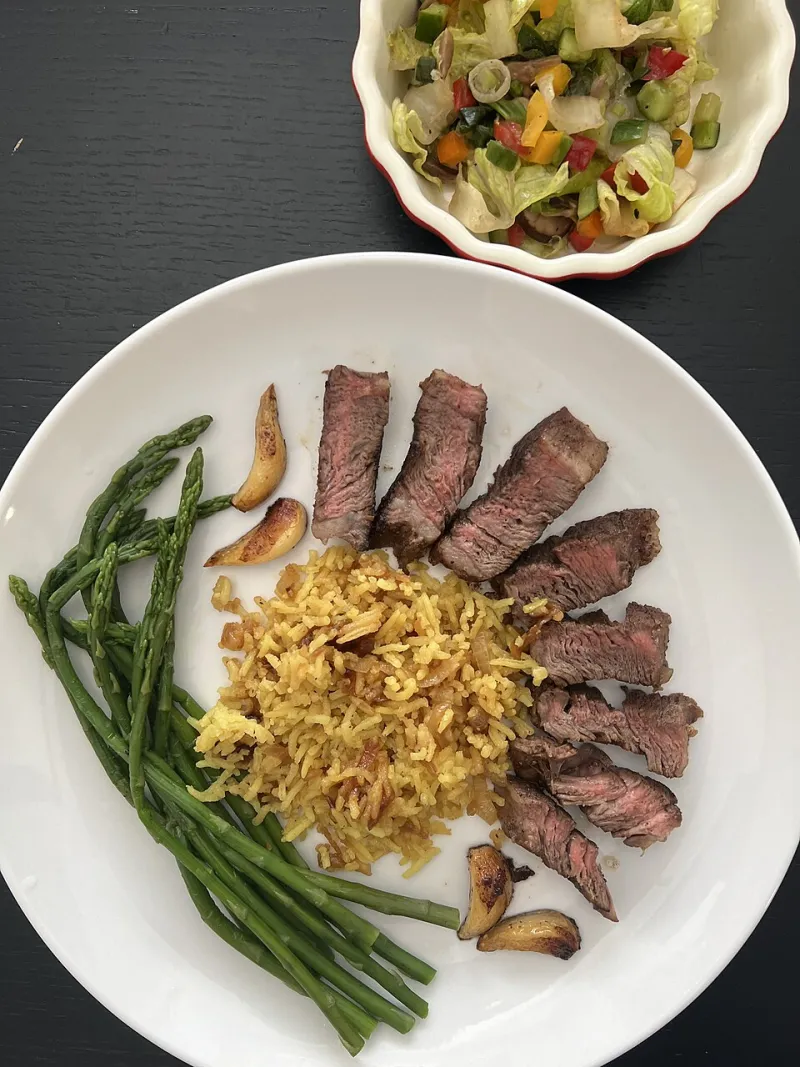
Her save was technique over restriction. Rinsing canned beans to pull out some of the potassium. Roasting vegetables instead of boiling them. Building flavor out of garlic, lemon, herbs, and a little smoked paprika instead of salt and cheese, which she still uses, in amounts she measures, on food she has decided is worth enjoying.
The Week-One Mistake Almost Everyone Makes
All three households did it: the total purge. And all three say the same thing about it, in almost the same words. Emptying the kitchen feels like taking action. It's usually just a big, expensive gesture that makes everybody in the house resent the person doing it.
Change two things in week one. Not twelve. Pick the two that matter most, get them boringly automatic, then add a third.
What's Still Hard
Nadia still finds restaurants exhausting. Emmanuel still has nights where he eats more rice than the plan says, and he has stopped treating that as a verdict on his character. Beth Ann still misses the version of dinner where she didn't have to think about it.
That last one is the thing none of the pamphlets cover. There is grief in changing how you eat, especially when food is how your family says I love you. Pretending otherwise doesn't make the change stick. Naming it seems to.
The Version They'd Tell You to Aim For
Not perfect. Nobody here is perfect, and the two who came closest to it briefly are the ones who fell hardest.
What they aim for is a menu that most nights cooks the same food with different proportions, keeps the dishes the family actually loves, adds rather than deletes, and leaves room in the week for a meal that's pure pleasure on purpose.
"The food is the medicine," Adaeze says. "But it still has to be food. If nobody wants to eat it, it's not medicine. It's just a prescription with a smell."