Learning to Eat Like It's Not a Competition: A Former Competitive Eater's Slow Road Back
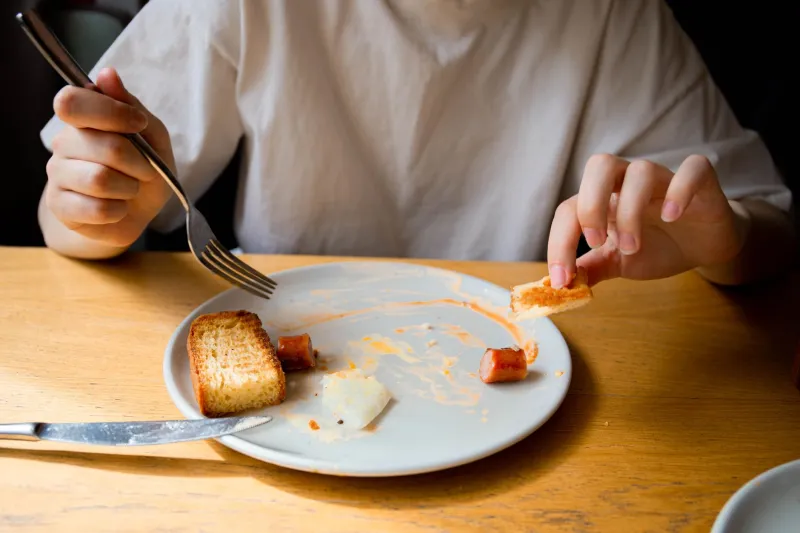
The first time I cooked for myself after retiring from competitive eating, I made one pork chop, a handful of green beans, and a small baked potato. Then I sat at the table and stared at it and felt something close to panic.
This is it? my brain asked. Where's the rest of it?
For six years, food had been my sport. I won qualifying rounds in three states, once put away eleven pounds of crawfish in eight minutes in Baton Rouge, and appeared on a regional morning show where the anchors gasped on cue. My relationship with food was simple, transactional, and completely insane: food was volume. Food was a clock. Food was an audience.
It was never, not once, dinner.
When Your Job Is the Opposite of Appetite
People imagine competitive eating is an appetite business. It's not. It's a capacity business. I trained my stomach the way a powerlifter trains a deadlift — water-loading, stretching, teaching my body to ignore the signals that exist to protect me. I could eat through fullness the way a marathon runner runs through a twisted ankle.
The side effects don't make great television. Chronic nausea. A dissociated, mechanical relationship with every bite. And a stranger thing nobody warns you about: you stop having cravings, because craving requires desire, and desire requires you to experience food as something other than a task.
When I quit at 34 — bad bloodwork, worse reflux, a birthday where I realized I couldn't remember the last time food tasted like anything — I assumed the hard part was over.
It wasn't. The hard part was learning to eat like a normal person, and it turns out nobody teaches that class.
The Weird Grief of a Small Plate
Here's what nobody tells you about leaving a food-adjacent sport: the discipline doesn't leave when you do. I still caught myself eating fast. Still scanned restaurants for the biggest portion. Still felt a flicker of that old competitive static when a plate arrived.
I talked to other former performers about this, and the pattern is eerie. A retired bodybuilder told me she ate six identical meals a day for a decade and 'still can't look at a chicken breast without doing math.' A former figure competitor described eating every meal for two years out of labeled containers and crying the first time she ordered pasta at a restaurant 'just because it sounded good.' When your body is your instrument, food becomes fuel, or a scorecard — anything but pleasure.
My therapist (yes, I got one; the sport will make sure you need one) gave me an assignment that felt almost insulting in its smallness: cook one simple plate, sit down, no phone, and take twenty minutes to eat it.
Twenty minutes. For a pork chop. I used to eat eleven pounds of crawfish in eight.
Slow Is a Skill You Have to Rebuild
The first few weeks were genuinely awkward. Chewing slowly felt performative. Tasting deliberately felt like a language I'd lost. But somewhere around week four, something cracked open. I made a tomato soup from scratch — not for training, not for content, just because tomatoes looked good at the farmers market — and I tasted it. Actually tasted it. Basil, a little smoke from the charred onion, salt I'd added at the right moment.
I sat there at my kitchen table with a bowl that cost maybe three dollars and thought: I competed professionally, and this is the best thing food has ever done for me.
These days I cook for one, which I've come to think of as the most underrated skill in America. One pan. One plate. Leftovers you're actually excited about. I've stopped counting anything — not calories, not minutes, not hot dogs. My stomach has mostly shrunk back to civilian size. My bloodwork made my doctor unclench.
And the surprise, the one I didn't see coming through six years of competition: the smallest plate I've ever eaten regularly is the fullest food has ever made me feel.
If your relationship with eating has become a performance — for an audience, for a scale, for a version of yourself you're chasing — I won't pretend one pork chop fixes it. But I'll tell you what I know now that I didn't know on any stage: food was never supposed to be a sport.
It's allowed to just be dinner. Even when dinner is quiet, and small, and only for you.