I Ate Nothing but My Own Pantry for 30 Days. Here's the Honest Ledger.
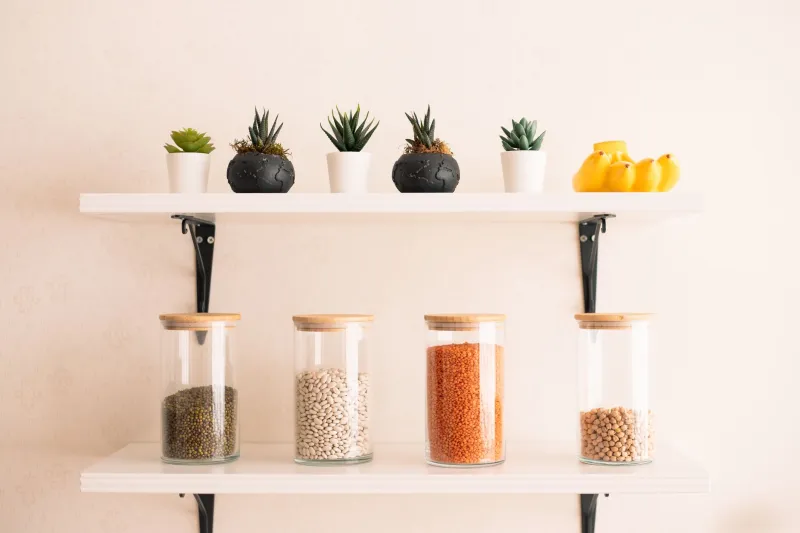
The rules were simple, which is not the same as easy: for 30 days, I would buy zero groceries. Everything I ate had to come from my pantry, freezer, or fridge. Condiments counted. The sad bag of dried chickpeas counted. The freezer-burned spinach from 2023 definitely counted.
I'm not a dietitian, and this wasn't a diet. It was closer to an intervention — for a grocery-shopping habit that had quietly gotten out of hand, and for a relationship with food that had gotten more anxious the more options I owned.
Week One: The Inventory Shock
Day one was an audit, and the audit was humbling. Three kinds of rice. Four cans of pumpkin puree purchased during what I can only describe as a fall fever dream. Enough pasta to survive a modest siege.
I estimate I had roughly $400 of food on hand. I'd been spending about $180 a week at the store, regularly re-buying things I already owned because I couldn't see them behind the things I'd also forgotten I owned.
Week one meals: lentil soup, a rice-and-black-bean bowl situation, frozen shrimp over half a box of linguine, and pancakes made from a baking mix I'd forgotten existed. Nothing was exciting. All of it was fine. That turned out to be the lesson.
Week Two: The Cravings Get Loud
This is where it got psychologically interesting.
Around day nine, I didn't crave food. I craved choice. I wanted to browse a produce section. I wanted the idea of takeout more than any actual dish.
Once I noticed that, I started asking a better question: am I hungry, or am I bored and shopping? Turns out a lot of my "hunger" was really just decision fatigue dressed up as appetite.
The reset forced constraints, and constraints, weirdly, quieted the noise. When you have seven ingredients, you stop agonizing over seven hundred options.
Week Three: The Creativity Nobody Warned Me About
By week three, something flipped. Necessity stopped feeling like deprivation and started feeling like a game.
Wins from the field notes:
- Chickpea flour + water + whatever spices = a genuinely decent flatbread.
- Frozen corn + canned green chiles + the last of the half-and-half = chowder that I would make again on purpose.
- Overripe bananas frozen in a bag, blitzed with cocoa powder = dessert that costs roughly nothing.
I cooked things I never would have cooked with a full fridge, because a full fridge always offers the comfortable option. Scarcity — even fake, self-imposed scarcity — is a great cooking teacher.
Week Four: The Numbers
Let's talk money, because inflation-weary is not a vibe, it's a budget line.
- Groceries spent: $0 (I did buy milk once, week two, in a moment of weakness — call it a $4 cheat)
- Estimated takeout avoided: 6 orders, roughly $95
- Food waste: Down to one sacrificed sweet potato and a science experiment formerly known as cilantro. In a normal month, I toss closer to $25–30 of food.
- Pantry inventory at end: Still not empty. Still not close.
That last line is the part that should bother all of us. A month of eating didn't dent the supply. The average American household throws out roughly a third of its food. I now have proof I was one of them.
What Actually Changed
Here's the part I didn't expect: my head got quieter about food.
I stopped meal-planning like it was a corporate strategy deck. I stopped feeling guilty about the produce drawer. I stopped treating grocery shopping as entertainment. When the 30 days ended, I restocked slowly and deliberately — and for the first time in years, I can see every shelf in my kitchen.
I also lost a couple of pounds without trying, mostly because restaurant portions and impulse snacks had quietly exited my life. But the weight is the least interesting headline.
The real change is this: I went from food as a source of low-grade stress to food as a set of skills. I know what I have. I know what to do with it. I know the difference between wanting to eat and wanting to shop.
Want to Try It? The Short Version
- Pick your month. Avoid holidays and travel weeks.
- Set your one allowance (mine: fresh milk) so a single slip doesn't end the whole thing.
- Inventory first. Photograph your freezer. You will forget what's in there.
- Plan around proteins and use-it-or-lose-it produce first; shelf-stable stuff can wait.
- Track what you toss. The waste list is the most educational document you'll produce.
Thirty days of eating your own pantry won't fix your budget, your health, or your grocery anxiety overnight. But it will show you — with receipts — how much you already have. And sometimes the first step in transforming your relationship with food is simply noticing how much of it was already in your house the whole time.