Two Pantries, One Table: How Immigrant Cooks Feed Their Families in Two Languages at Once
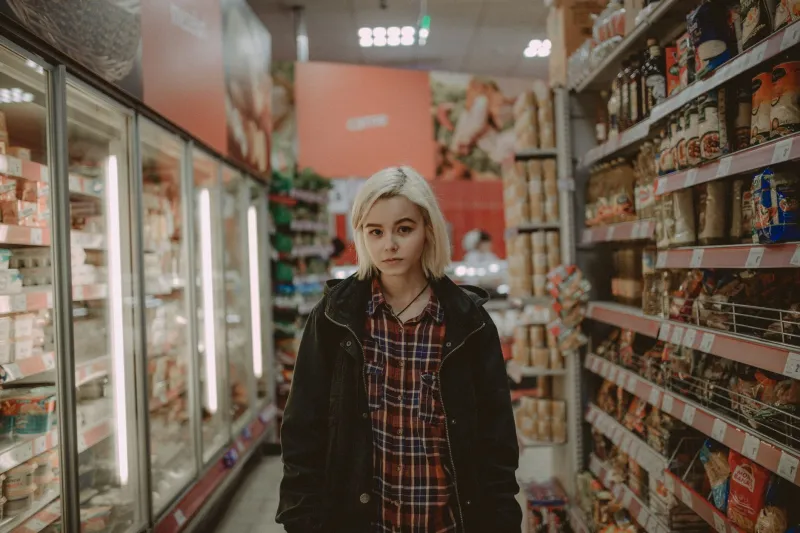
Ask most Americans how they learned to cook, and they'll mention a parent, a cookbook, maybe a TV show. Ask someone who arrived here from somewhere else, and the answer usually starts with a grocery store they didn't recognize.
That moment — standing in an aisle, holding a vegetable you can't name, trying to reverse-engineer a dinner from whatever's in stock — changes a cook forever. And for a growing number of families, that improvisation never really stopped. It just became the house style.
We spent time with three home cooks who learned American kitchens before they mastered American English, and whose family tables now hold both worlds at once.
The Grandmother Who Measures in Palmfuls
Rosa Delgado, 71, came to San Antonio in 1979 with two suitcases and a memory of her mother's caldo. What she didn't have was masa harina, fresh epazote, or the dried chiles she'd grown up with in Guanajuato.
"The first year, I cooked with what H-E-B had," she says, laughing. "Bell pepper instead of poblano. It was a crime, but it was our crime."
Those substitutions stuck in ways she never expected. Her grandchildren now ask for her chili — a dish that exists nowhere in Mexico, a hybrid of her mother's guisado and the Texas chili cook-offs she watched from the sidelines for decades. She makes it with a palmful of cumin, a palmful of the good paprika her neighbor brings her from Albuquerque, and beans that would make her abuela clutch her pearls.
"People ask if it's authentic," Rosa says. "I tell them it's honest. That's better."
Her kitchen notebook, kept in Spanish and now increasingly in her granddaughters' English annotations, is a family document in the truest sense. Half the recipes have a line crossed out and a note in the margin: no fresh tomatillo here — use salsa verde from jar, add lime.
The Restaurateur Who Solved the Bread Problem
Nine thousand miles and a world away from Rosa's kitchen, Linh Tran runs a small Vietnamese restaurant in a strip mall outside Lincoln, Nebraska. When her family arrived in 1994, the nearest fish sauce was a two-hour drive. The nearest banh mi roll? Nowhere.
"My mother baked bread in a cake pan," Linh says. "It was wrong in every way, and we loved it."
That spirit of cheerful wrongness still runs her kitchen. Her pho broth simmers for twelve hours the traditional way — but she finishes it with a splash of apple cider vinegar because Nebraska apples were what she had, and honestly, it works. Her kids' favorite after-school snack is leftover rice pressed into patties and pan-fried, topped with whatever hot sauce is open.
When she opened the restaurant in 2011, she made a quiet decision: the menu would have footnotes. Little explanations. "We say rau thom means fresh herbs, and you wrap it yourself," she explains. "Customers started wrapping. Then they started growing Thai basil in their gardens. That's when I knew food here could be a door, not a wall."
Her daughter, now in culinary school in Omaha, texts her fusion experiments — pho-spiced pot roast, gochujang-free (there's none in the house) sticky wings made with Nebraska honey. Linh texts back her verdicts. The negotiation of two food languages continues into a second generation.
Starting Over, Again, at the Stove
Not every story begins with a choice. Olena Kovalenko landed in Harrisburg, Pennsylvania, in 2022, after her family fled Kyiv. She was a trained pastry chef back home. Here, she didn't know where to find buckwheat, and the sour cream was, in her words, "a rumor of sour cream."
The first borscht she made in America was, by her own account, terrible. The beets were canned. The dill was dried. But her daughters ate every bite, and Olena cried at the table — not from sadness, exactly.
"My daughter said, 'Mama, it tastes like our kitchen but also like here,'" Olena remembers. "I decided that was allowed."
She now teaches a small community cooking class through her church, where her varenyky share a table with her students' contributions: aPennsylvania Dutch pot pie, jarred local honey, sweet corn from a Lancaster farm stand folded into her mother's fritter batter. Her pantry has an American shelf and a Ukrainian shelf, and the boundary between them gets blurrier every month.
"Refugee means you lost your kitchen," she says. "It does not mean you lost your cooking. The cooking is in the hands."
What the Rest of Us Can Learn
You don't have to cross an ocean to cook like an immigrant. You just have to cook like one for a day. A few takeaways from these three kitchens:
- Substitution is a skill, not a failure. Rosa's bell-pepper years made her a more flexible cook than she'd have been with a fully stocked market. Constraints build intuition.
- Write down the improvisations. The margin notes in family recipes are where the real heritage lives. If you've ever swapped an ingredient and had it work, write it down.
- Let the kids annotate. Second-generation fusion isn't dilution — it's the recipe learning to live somewhere new.
- Shop your actual store, not your memory. The most successful fusion cooks start with what's genuinely available, then reach toward tradition, not the other way around.
There's a phrase Olena uses that might be the best summary of all of this: "Two pantries, one table."
Every family that's merged a food heritage with an American kitchen knows the truth in it. The food of home and the food of here were never enemies. They were just waiting, on opposite shelves, for someone hungry enough to put them on the same plate.
And that plate, more often than not, becomes the thing the next generation asks for — the dish that couldn't have existed anywhere else, because it could only have been made here, by someone who remembered there.