Dinner on the Doorstep: The Quiet Rise of Cooking for Strangers Who'll Never Say Thank You
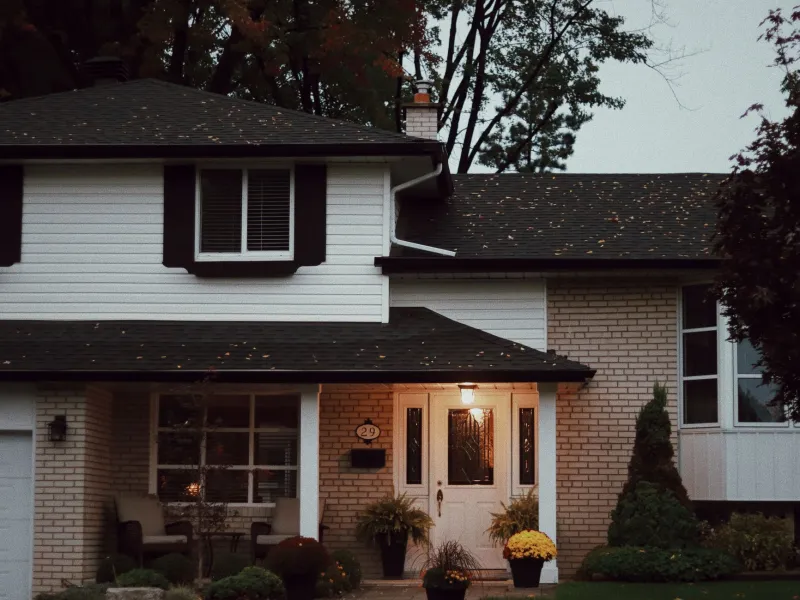
The lasagna sits on Dana Whitfield's front porch in a foil pan, a sticky note on top reading only: Hope this helps. — A neighbor. By the time the young family two doors down retrieves it, Dana is back inside her kitchen in Columbus, Ohio, already washing the dish she used to make it. She will never knock on their door. She will never learn the baby's name.
"That's the whole point," she tells me over the phone. "If they had to say thank you, it would cost them something. This way, it costs them nothing."
Dana is part of a quietly growing movement — call it anonymous meal gifting — where Americans cook for neighbors, and sometimes total strangers, without expectation of recognition, reciprocation, or even a wave from the window. And according to the food banks, churches, and mutual aid groups racing to organize it, the practice is changing the cooks as much as the fed.
The Porch Dinner Phenomenon
The mechanics are simple. Someone hears about a need — a new mom on bed rest, a widower who hasn't cooked since the funeral, a family navigating a cancer diagnosis — and leaves a meal on the porch. No doorbell. No conversation. Sometimes no name.
In some towns, the practice has gone semi-organized. Facebook groups with names like "Porch Dinners [City]" coordinate drop-offs using shared spreadsheets. Meal train platforms, once used mostly for close friends, now routinely include slots for people the volunteers have never met.
"Five years ago, most of our meal requests came from someone's Sunday school class," says a volunteer coordinator with a church network in Tennessee. "Now half the sign-ups are strangers. People scroll past a post and just... start cooking."
Three Cooks, Three Kitchens
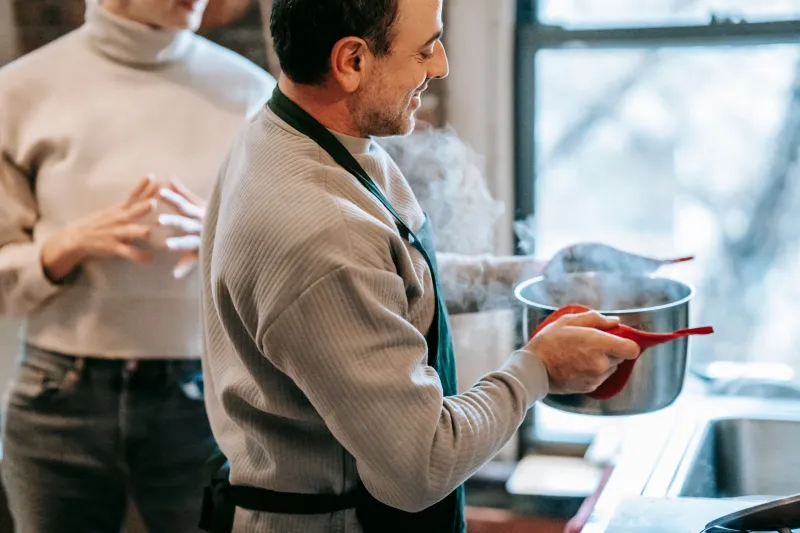
Dana, 54, the empty-nester. After her youngest left for college, Dana describes her kitchen as "a museum of two." The anonymous porch dinners gave her a reason to cook in real portions again. "I wasn't ready to feed a crowd face-to-face," she admits. "But I could feed one." She's made 41 dinners in 14 months. She keeps a note on her fridge tallying them — not out of pride, she insists, but because "it's proof I still matter at 5 p.m."
Marcus, 33, the recovering workaholic. A software engineer in Austin, Marcus joined a neighborhood meal group after burnout sent him into therapy. His assignment: a family of five whose father was undergoing dialysis. "I'd never cooked for anyone but myself as an adult," he says. His first attempt — a slightly burned chicken tetrazzini — taught him something unexpected. "Cooking for someone anonymous made me pay attention. I couldn't ask what they liked. I had to imagine them. It was the most generous I'd felt in years, and no one clapped. That was the medicine."
Ruth, 71, the widow. Ruth lost her husband of 46 years and, with him, the habit of cooking for two. Grief counselors suggested she cook for others before she felt ready. Her first porch delivery — a pot of chicken and dumplings for a stranger recovering from surgery — was, in her words, "the first time my kitchen didn't feel like a shrine." She still cooks weekly. She still doesn't knock.
Why Anonymity Heals the Cook
Psychologists who study prosocial behavior note that giving without recognition can sidestep the performative layer of charity. There's no applause to chase, no social currency earned — just the act itself.
For people rebuilding their relationship with food — former dieters, recovering control freaks, caregivers running on empty — cooking anonymously removes the audience. "You can't fail at generosity if no one's grading it," as one counselor put it.
There's also the reciprocity question. Meal-giving can create awkward social debts. Anonymous gifting dissolves the ledger entirely. The cook gives; the eater receives; nobody owes anybody a pan.
Institutions Are Taking Notice
Food banks and faith organizations, always alert to volunteer energy, are moving to formalize the trend. Some now run "porch pantry" programs with food-safety training and label requirements. Others are piloting apps that match anonymous cooks with verified needs — protecting privacy on both ends.
The stakes are real: food insecurity in the U.S. remains stubbornly high, and the households most likely to fall through the cracks — the newly bereaved, the newly discharged from hospitals, the newly arrived — are precisely the ones porch dinners reach.
The Pan, the Note, and the Point
Back in Ohio, Dana has a rule: disposable pans only, no strings attached. But once, a pan came back — washed, with a note tucked inside: *You don't know who we are. We don't know who you are. But our kids ask if "the dinner fairy" is coming back.
She keeps that note on her fridge, next to the tally.
"People think transformation happens with big gestures," she says. "Mine happened over a foil pan of lasagna, on a porch, in the dark. I fed a stranger. Honestly? The stranger fed me right back."