Six Months to Eat It All: What Happened When the Hendersons Declared War on Their Chest Freezer
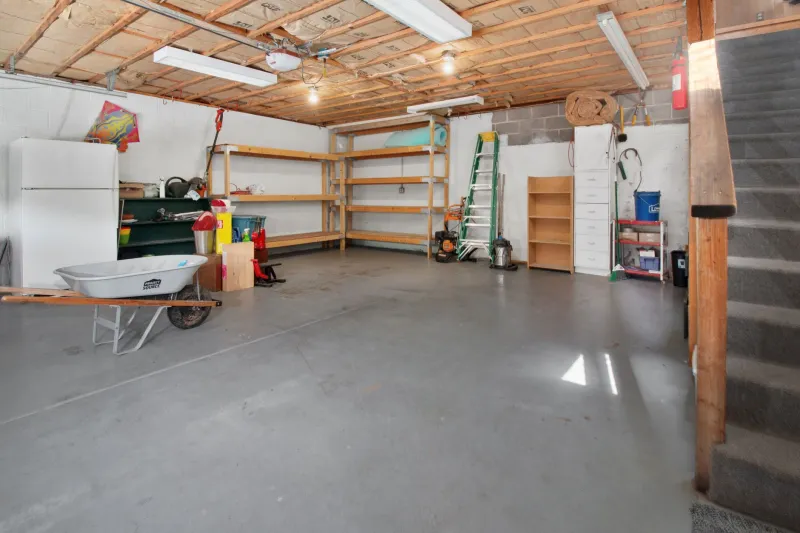
The freezer sits in the garage of a split-level home in Carmel, Indiana, and for nine years it never dropped below half full. Bricks of ground beef from Costco runs. Bags of frozen broccoli that had been there so long the frost on the packaging had its own frost. Forty pounds of chicken, split into vacuum-sealed portions, purchased during a sale in 2019 and never quite finished.
"I used to open the lid and feel proud," says Dana Henderson, 44, a project manager and mother of two. "Like, look at us. We're prepared."
Then last winter, standing in the cold garage in her slippers, she felt something different. "I opened it and I just felt tired. Like the freezer was a second job I kept forgetting to clock into."
The Arithmetic of Abundance
The Hendersons aren't unusual. The American love affair with bulk buying runs deep — Costco alone has more than 60 million member households, and industry estimates suggest roughly one in three homes keeps a standalone freezer humming somewhere out of sight. The logic is airtight on paper: buy in quantity, pay less per pound, never run out.
But somewhere between the logic and the garage, the math stops working. Food gets buried. Food gets forgotten. Food gets freezer-burned into something you'd rather throw away than admit you bought.
Dana started keeping a list. Every time she pulled something from the freezer, she wrote it down. Then she added up what they'd tossed in a single month: about $85 worth of food, ruined by neglect. Multiply that out and the Hendersons were quietly incinerating a thousand dollars a year — savings from bulk buying that never actually saved anything.
"That's when it stopped being frugal," her husband Mike says. "It was just hoarding with a membership card."
The Rule: Nothing In, Everything Out
In January, the family made a pact they called the Great Eat-Down. The rules were simple: no bulk purchases for six months. No Costco runs except for essentials like milk and eggs. Every meal had to start with what was already in the house.
The first month was a slog of improvisation. Dinner became a puzzle — that ancient pork shoulder, the forgotten bag of edamame, three jars of salsa bought "because they were a great deal." Dana started photographing the results and texting them to her sister, who'd begun her own freezer intervention.
Something unexpected happened around week five. The meals got better.
"When you can't just grab a backup, you actually pay attention," Dana says. "I was defrosting the pork shoulder on Tuesday thinking about how I'd cook it Thursday. I hadn't thought about dinner like that in years. It used to be a decision I made in a panic at 5:30."
What the Freezer Was For
About two months in, Mike said something that reframed the whole project. "I realized I bought all that food for a disaster that never came. The tornado shelter food. The pandemic food. And meanwhile we were eating takeout four nights a week because the freezer stressed us out."
There's a real psychology underneath the stockpile, and it's not just about savings. Food psychologists have long linked stockpiling to a sense of control — a hedge against uncertainty that feels especially potent after years that gave Americans a lot to be uncertain about. The chest freezer is a promise you make to your future self: you will be okay.
The trouble is that the promise quietly becomes a burden. A freezer full of food is a to-do list in disguise, and an unexamined one at that.
By month four, the Hendersons' freezer held a single bag of peas. Dana says she actually laughed when she saw it. "It looked like the freezer was on a diet too."
The Empty Shelf Feeling
Here's the part nobody tells you: the emptiness felt vulnerable at first. Dana admits to a few moments of genuine panic in the grocery store, buying only what the week needed, resisting the instinct to load the cart "just in case."
But the panic faded faster than she expected. In its place came something she describes as lightness — a garage you could walk through, a grocery bill that dropped by nearly a third, and dinners built from attention instead of inventory.
The family still keeps a freezer. It's about a quarter full now, and Dana says that's the point. "We stockpile for the week now, not for the apocalypse. There's enough. We know there's enough. That was always the thing we were trying to feel, and it turns out you can't buy it by the pound."
The Great Eat-Down officially ended in June. The family celebrated with a meal that cost more per plate than anything they'd bought in bulk — a small ribeye, a bag of green beans, corn on the cob from the farm stand down the road.
"We ate it on the patio," Mike says. "And Dana goes, 'You know what we should do? Buy a deep freezer.' And we both just started laughing."
Some habits transform by breaking. The Hendersons' freezer is emptier now — and dinner, finally, feels full.