She Fed Hundreds of People Every Night — and Forgot to Take Care of Herself. Then Everything Changed.

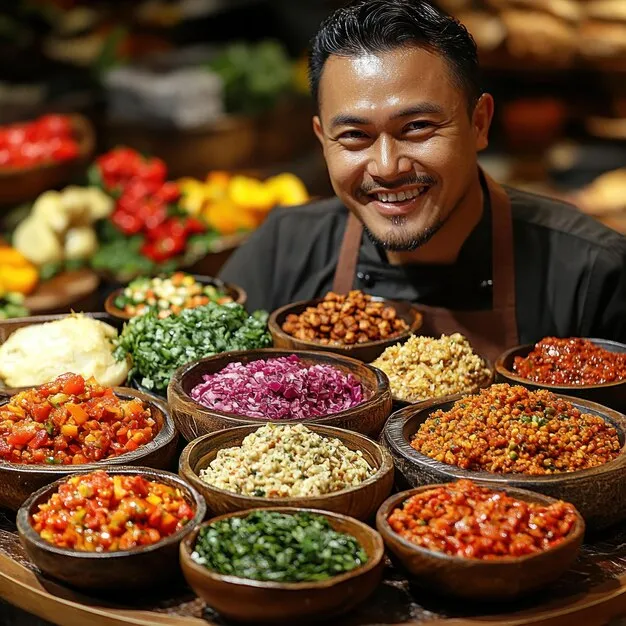
Photo: Billboard75anr, CC BY-SA 3.0, via Wikimedia Commons
Dani Kowalski can tell you exactly what a perfect plate looks like. The sauce-to-protein ratio. The height of the garnish. The precise temperature a dish needs to hit the pass. After twelve years managing kitchens at a string of well-regarded Chicago restaurants, she can break down a menu with her eyes closed.
What she couldn't figure out, for most of those twelve years, was how to feed herself.
"It sounds ridiculous, right? I'm surrounded by food all day. But that's actually the problem," she says, laughing a little, seated at a corner table in the Wicker Park bistro where she now works. "When your whole life is food, food stops being something you think about. It just happens to you."
At her heaviest, Dani weighed 267 pounds. She was 34 years old, pre-diabetic, dealing with chronic knee pain, and sleeping maybe five hours a night. She'd tried diets before — keto for a month, a juice cleanse that lasted four days, a gym membership she used exactly twice. Nothing stuck, because nothing accounted for the actual reality of her life: on her feet for ten-hour shifts, eating standing up at 11 p.m., surrounded by a culture that treated self-neglect like a badge of honor.
Today, she's 80 pounds lighter, her last bloodwork came back clean, and she just ran her first 5K. She did it all without leaving the industry she loves.
The Restaurant Industry's Dirty Little Secret
If you've never worked in food service, it can be hard to understand just how physically and psychologically demanding it is. The Bureau of Labor Statistics consistently ranks restaurant work among the most stressful occupations in the country. Irregular hours, standing all shift, heat, noise, high-pressure service windows, and a staff culture that bonds over late-night drinking and shared plates of whatever's left at close — it's not exactly a setup for wellness.
"There's this mentality that taking care of yourself is soft," Dani explains. "You eat what's fast, you drink when the shift ends, you sleep when you can. Nobody's meal-prepping on their day off. They're recovering."
For Dani, the wake-up call came from her doctor and, unexpectedly, from her feet. "I was having trouble standing through a full service. My knees were shot. My doctor told me I was heading toward Type 2 diabetes. And I thought — I cannot do this job if my body gives out. That's when it got real."
Rethinking Everything — Without Starting Over
The first thing Dani did was stop looking for a plan designed for someone with a normal schedule. "Every diet I'd ever tried assumed you ate breakfast at 8 a.m. and dinner at 6 p.m. That's not my life. It never will be."
Instead, she worked with a registered dietitian who had experience with shift workers — something she specifically sought out after a Google search led her to a Chicago-area practice that listed "non-traditional schedules" as a specialty. Together, they built an approach around her actual life, not an idealized version of it.
A few of the strategies that made the biggest difference:
Anchor meals, not scheduled meals. Rather than eating at fixed times, Dani identified two "anchor" moments in her day — one before her shift and one after — where she committed to eating something intentional. Everything else was flexible. "It sounds basic, but just having two real meals I planned for changed everything. Before, I'd skip eating until I was starving and then inhale whatever was in the walk-in."
Pre-shift prep as a non-negotiable. Every day before leaving for work, Dani packs what she calls her "shift bag" — a small cooler with portioned snacks and a real meal she can eat during her break. Greek yogurt, hard-boiled eggs, cut vegetables, a turkey wrap. "I treat it like mise en place. It's just prep. That framing helped me actually do it, because prep is something I understand."
Rewriting the staff meal. As kitchen manager, Dani had influence over what the staff ate before service. She started quietly shifting those meals — more protein, more vegetables, less fried filler — without making it a big announcement. "I didn't want to be the health police. I just started cooking differently for the team. Nobody complained. Most people actually felt better during service."
Alcohol culture, handled honestly. The post-shift drink is practically a restaurant institution. Dani didn't cut it out entirely — she's realistic about culture and community — but she set a personal rule: one drink, and only on days she'd actually eaten properly. "I'm not here to lecture anyone. But I knew the drinking was covering up hunger and stress for me. Once I started eating real food, I wanted it a lot less."
The Mental Shift That Made It Stick
Strategies only go so far. Dani is clear that the thing that actually made the change sustainable wasn't a meal plan or a fitness routine — it was a shift in how she saw herself in relation to food.
"I spent my whole career thinking about food in terms of other people's pleasure. What does the guest want? What does the dish need? I never once asked what I needed from food," she says. "When I started treating myself like a guest worth feeding well, everything changed."
That reframe — from food professional to person who deserves nourishment — sounds simple. But for anyone who's worked in service, where self-sacrifice is the default setting, it's genuinely radical.
What Restaurant Workers (and Everyone Else) Can Take Away
Dani's story isn't just for line cooks and kitchen managers. Anyone navigating a demanding, irregular, food-saturated work environment — nurses, truck drivers, overnight retail workers — will recognize the structural challenges she faced.
Her core message is this: stop waiting for your life to look like the life the diet plan was designed for. Work with what's real.
"I'm not going to wake up at 6 a.m. and make a smoothie. That's never happening," she says. "But I can pack a bag. I can plan two good meals. I can decide that I'm worth the same care I give everything else in my kitchen."
Eighty pounds later, she's proof that it's enough.