52 Recipes, One Year, One Person Changed: What Happened When I Cooked My Way Out of Anxiety
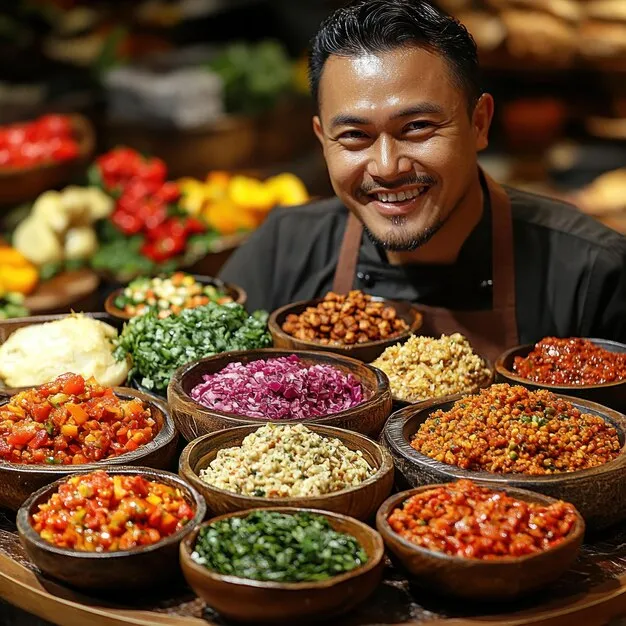
Photo: person cooking exotic recipe in home kitchen smiling surrounded by colorful spices and ingredients, via img.freepik.com
Jordan Kim's kitchen used to be a place of avoidance. The 34-year-old graphic designer from Portland, Oregon, had what they describe as a "deeply boring and deeply comfortable" relationship with food — the same rotation of pasta, rotisserie chicken, frozen burritos, and cereal that had sustained them since college. It wasn't that Jordan didn't care about food. It was that trying something new felt, inexplicably, like a risk.
"I have generalized anxiety," Jordan explains. "And it shows up in a lot of places, but one of the sneakiest places was food. New restaurants stressed me out. Recipes with unfamiliar ingredients stressed me out. Even a new brand of pasta sauce could throw off my whole evening. I didn't realize how much mental space that was taking up until I decided to do something about it."
The decision came on a gray January afternoon, the kind that Portland specializes in. Jordan made a simple, almost offhand resolution: cook one recipe they'd never tried before, every single week, for a full year. No theme, no dietary framework, no rules beyond the single requirement that it be genuinely new.
What followed was 52 weeks of mild chaos, genuine discovery, and — unexpectedly — the most significant shift in mental wellbeing Jordan had experienced outside of therapy.
Week One: The Terrifying Tagine
Jordan's first recipe was a Moroccan chicken tagine, chosen largely because a coworker had mentioned it offhandedly and Jordan had Googled it at 11 p.m. "I had to buy preserved lemons. I didn't know preserved lemons were a thing. I stood in the international aisle at the grocery store for probably eight minutes."
The dish took three hours. It didn't look like the photo. Jordan ate it alone on a Tuesday night and described the experience as "confusing but kind of thrilling?"
"The anxiety was still there — I kept second-guessing the spice amounts, convinced I'd done something wrong. But then I took a bite and it was genuinely, actually good. And I'd made it. That felt like something."
That feeling — small but real — became the thread Jordan followed for the next 51 weeks.
What's Actually Happening in Your Brain
It turns out Jordan's experience isn't just anecdotal. Dr. Rachel Nguyen, a clinical psychologist who works at the intersection of food behavior and mental health, explains that culinary novelty has measurable neurological effects.
"When we try something genuinely new — a new flavor, a new technique, a new cultural food tradition — we're activating the brain's reward pathways while also engaging prefrontal cortex processing," she says. "That combination is particularly valuable for people with anxiety because you're essentially practicing the skill of tolerating uncertainty and being rewarded for it."
In other words, making a dish you've never made before is low-stakes exposure therapy. You don't know exactly how it'll turn out. You survive the not-knowing. You get a meal at the end.
Neuroplasticity — the brain's ability to form new connections — is also at play. "Repeated novel experiences literally rewire the brain over time," Dr. Nguyen adds. "Doing this consistently across a year isn't just building cooking skills. It's building a more flexible nervous system."
Jordan didn't know any of this at the time. They were just trying to eat something other than pasta.
The Turning Weeks
Not every week was transformative. Week seven — an ambitious attempt at homemade croissants — was, by Jordan's own admission, "a disaster that I'll never speak of again." Week nineteen, a simple Japanese miso soup, was so calming to make that Jordan has cooked it nearly every week since.
But a few weeks stand out as genuine turning points.
Week 14: West African Peanut Stew. "I'd never cooked anything from West Africa before. I felt weirdly emotional making it — like I was being welcomed into something. I called my friend Amara, who's Ghanaian, and she walked me through it on the phone. That recipe became a friendship ritual."
Week 28: Homemade Ramen Broth. An all-day project that required Jordan to stay home, be present, and tend to a pot for six hours. "I couldn't be anxious about anything else. I had to just be there, stirring. It was the most meditative Sunday I'd had in years."
Week 41: Tamales with Neighbors. Jordan had been invited to a tamales-making gathering hosted by a neighbor and brought it into the project. "I'd never made them. It took four people and four hours and it was loud and messy and I wasn't in control of any of it. And I was completely fine. That was a big deal for me."
The Confidence Compound Effect
By the time Jordan hit week 52 — a celebratory homemade birthday cake, vanilla with cardamom buttercream — something had quietly shifted.
"I started noticing it around month seven or eight. I was less stressed at restaurants. I was ordering things I didn't recognize instead of defaulting to the safest option. I tried Ethiopian food for the first time and I wasn't white-knuckling it — I was just... curious."
Dr. Nguyen calls this the "confidence compound effect." "Each small act of culinary bravery builds evidence for a new self-narrative," she explains. "Instead of 'I'm someone who doesn't try new things,' you accumulate proof that you do. Over time, that becomes your identity."
For Jordan, it extended well beyond food. "I pitched a project at work I'd been sitting on for two years. I booked a solo trip to Mexico City. I'm not saying cooking 52 recipes fixed my anxiety — I still have it, I still go to therapy. But it gave me a practice ground for being uncomfortable. And that changed things."
15 Recipes From Jordan's Year to Start Your Own Journey
Jordan curated a starter list for anyone who wants to run their own version of this experiment. The only rule: pick ones that feel just slightly outside your comfort zone.
- Moroccan Chicken Tagine — The one that started it all. Warming, forgiving, fragrant.
- West African Peanut Stew — Rich, hearty, and deeply satisfying on a cold night.
- Classic Miso Soup — Deceptively simple. Endlessly soothing.
- Shakshuka — Eggs poached in spiced tomato sauce. Weekend brunch magic.
- Korean Japchae — Glass noodles with vegetables and sesame. Worth every step.
- Homemade Ramen Broth — Commit to the time. It pays off completely.
- Peruvian Lomo Saltado — A stir-fry that somehow also has french fries in it. Yes, really.
- Indian Saag Paneer — Creamy, spiced spinach with fresh cheese. Approachable and stunning.
- Thai Larb — A bright, herby minced meat salad that'll change how you think about salad.
- Homemade Tamales — Better with company. Make it a gathering.
- Egyptian Koshari — Lentils, pasta, rice, crispy onions, tomato sauce. Chaotic and perfect.
- Vietnamese Pho Broth — Another all-day project. Another Sunday well spent.
- Brazilian Brigadeiros — Chocolate truffle-like sweets. A joyful, low-pressure win.
- Taiwanese Scallion Pancakes — Flaky, crispy, deeply addictive. Easier than they look.
- Cardamom Vanilla Cake — Jordan's year-one celebration. Bake it for any milestone worth marking.
The Real Transformation
At the end of our conversation, Jordan said something that stuck with us: "I thought I was doing a food project. But I was actually practicing being a person who tries things."
That's the thing about food — it's rarely just about food. It's about identity, comfort, fear, connection, and courage. Sometimes all in the same bowl.
You don't need to commit to 52 recipes. You don't need a spreadsheet or a theme. You just need one dish you've never made before, and enough curiosity to see what happens.
Start there. See where it takes you.