It's Not Your Kitchen, Mom: The Delicate Art of Helping Without Taking Over

Photo: Geoff Charles, CC BY-SA 4.0, via Wikimedia Commons
The pantry told the whole story before anyone said a word.
Shelves of canned peaches in heavy syrup. A stack of low-sodium labels that weren't low-sodium at all, just labeled that way. Saltine crackers, white rice, a jar of bacon grease by the stove — because in my mother's kitchen, throwing out bacon grease was practically a moral failing.
My mom was 82, freshly diagnosed with type 2 diabetes, and her endocrinologist had handed her a pamphlet and a prescription. What he didn't hand her was a plan. And what I didn't have, standing in her kitchen in suburban Ohio, was permission. Because here's the thing nobody tells you: it's not your kitchen.
The Pantry Is Personal
We tend to talk about older adults' eating habits like they're problems to solve. Too much sodium. Too many refined carbs. But those shelves didn't fill themselves. Every box of Jell-O and every can of cream of mushroom soup represents decades of habit, memory, and identity.
My mother cooked through the Depression-era habits her own mother taught her. She cooked through four kids, two layoffs, and one very lean year in 1974. That pantry was a resume. Walking in with a trash bag and good intentions is how you turn a health scare into a family fight.
And I almost did exactly that.
The Confiscation Phase (Learn From My Mistakes)
On my first visit after the diagnosis, I did the thing. I swapped her white bread for whole grain, tossed the peaches in syrup, and replaced her vegetable oil with olive oil. I felt efficient. Righteous, even.
She let me finish. Then she quietly bought everything back before I'd pulled out of the driveway.
"You came into my house and treated me like a child," she told me later, and she wasn't wrong. Research on family caregiving backs up what my ego learned the hard way: control-based interventions in aging parents' kitchens tend to breed resentment, secrecy eating, and in some cases, outright refusal. Nobody, at any age, loves being dietary-policed in their own home.
What Actually Worked: Cooking Next to Her, Not For Her
The turnaround started, embarrassingly, with a recipe card.
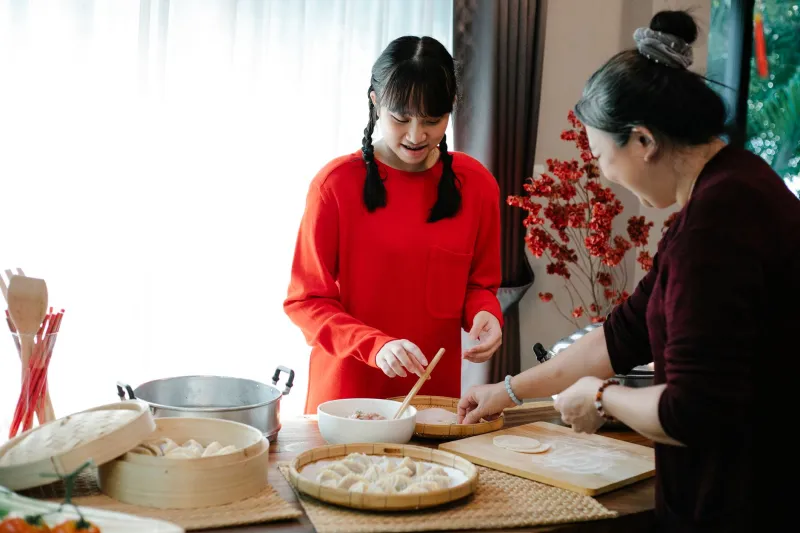
My mother's chicken and dumplings were legendary. Instead of banning them, I asked her to teach me how she made them. Then, standing side by side, we made small adjustments together — less salt in the broth, a splash of milk instead of cream, more vegetables because "it stretches the soup anyway, doesn't it?"
That last one was her idea. That's the part that matters.
Dietitians who work with older adults call this approach collaborative food work, and the families who succeed at it tend to follow a few patterns:
- They cook together instead of correcting from the counter. Side-by-side changes feel like teamwork. Across-the-kitchen criticism feels like an audit.
- They honor one or two non-negotiables. My mother kept her Sunday fried chicken. Everything else flexed. Giving ground somewhere made her willing to give it everywhere else.
- They upgrade rather than eliminate. Peaches in juice instead of syrup. Brown rice blended half-and-half with white until nobody noticed. Swap, don't strip.
- They let the doctor be the bad guy. "Dr. Okafor said" landed much softer than "I said." Sometimes you need a third party with a white coat to absorb the friction.
Culture, Memory, and the Food That Raised You
For a lot of American families, this gets more complicated than salt shakers. Food traditions carry culture — the cornbread, the adobo, the Sunday gravy, the lutefisk nobody actually likes but everybody serves. Asking an aging parent to abandon those dishes can feel, to them, like being asked to abandon who they are.
The families who navigate this well don't erase tradition. They translate it. They lighten the gravy without losing the ritual of Sunday dinner. They keep the recipes and adjust the ratios. The point was never the sodium — the point was the table.
You're Not the Parent Yet
Here's what I finally understood, about six months into this: my mother doesn't need a kitchen manager. She needs a kitchen companion. Someone who shops with her instead of for her, who reads labels out loud in the grocery store like a co-conspirator instead of a parole officer.
Her A1C has come down. Her pantry still has a jar of bacon grease, because some things are not up for negotiation, and honestly, she's earned that.
The intervention that works isn't an intervention at all. It's just dinner — made together, adjusted slowly, seasoned with enough respect that nobody feels like a patient in their own home.