When the Budget Gets Small, the Cooking Gets Real: Inside America's $40 Grocery Week
The rules are simple enough to fit on an index card: seven days, forty dollars, no eating out, no raiding the pantry you already own. Everything you eat has to come from that single grocery run.
The $40 Week — sometimes $30, sometimes $29, pegged to the average weekly SNAP benefit — started as an awareness stunt on social media. Food policy influencers did it to make a point. Church groups in Ohio and Texas adopted it as a Lenten practice. Then something unexpected happened: people who finished the week didn't just talk about money. They talked about how they cooked. How they planned. How they felt at 6 p.m. on a Tuesday.
And that's where the story stops being about budgets and starts being about transformation.
The Accountant Who Learned to Cook Backwards
Dana Whitfield, 41, does forensic accounting in suburban Atlanta. She earns well into six figures. She also hadn't cooked a full meal since college — her kitchen was, in her words, "a place where DoorDash drivers left things."
"I did the challenge because my book club did it, and I thought it would be funny," she says. "It was not funny. Day two, I stood in Kroger holding a bag of dried pinto beans like it was a foreign object."
What changed for Dana wasn't the $38.62 she spent. It was the sequencing. With no room for impulse buys, she had to plan meals before shopping instead of after — what she calls "cooking backwards." Rice on Monday became fried rice on Wednesday became rice-and-bean bowls on Friday. A whole chicken at $1.29 a pound turned into three distinct dinners and a pot of stock.
"By day five I was legitimately excited about leftovers," she says. "I'd never been excited about food in my life. I'd been eating for twenty years the way you fill up a car."
Three months later, Dana still cooks four nights a week. Her grocery bill is down about $200 a month. But the number she keeps repeating is different: "I didn't know I liked cooking. Nobody ever told me that was in there."
The Week That Wasn't a Choice
Marcus Bell, 34, a warehouse worker in Youngstown, Ohio, doesn't call it a challenge. "That's just February," he laughs.
Marcus ran the structured version with his church's men's group, partly to understand what his sister manages monthly on SNAP with two kids. But unlike Dana, he came in with skills — his grandmother raised him on collops, cornmeal, and stretch-everything soups. The week gave him back something he'd lost working nights: rhythm.
"When you've got $5.70 a day, you can't grab the gas station taquito," he says. "So I was up at 4 p.m. before my shift, actually cooking. Oatmeal with a mashed banana. Big pot of cabbage and sausage. I was eating on time for the first time in years."
That detail — meal timing — comes up again and again in challenge debriefs. Convenience food isn't just expensive; it's unscheduled. It arrives when desperation does. A planned pot of soup, by contrast, creates a structure to the day that participants describe as almost disproportionately calming.
The Nutritionist's Caveat
Not every habit born of a $40 week is worth keeping. Dr. Elena Ruiz, a registered dietitian in Denver who has advised several church groups running the challenge, draws a careful line.
"The genuinely transformational stuff is real: batch cooking, whole ingredients, eating at consistent times, rediscovering beans and oats," she says. "Those are evidence-backed practices that happen to also be cheap."
"The quietly disordered stuff is when the week becomes a personality. When someone does it monthly as penance for spending, or starts treating hunger as a moral achievement, or fixates on the number to the point that food becomes a math problem instead of nourishment. Scarcity framing can slide into restriction, and restriction has a way of rebounding hard."
Her guidance for anyone trying the week: build in fat and protein, don't skip meals to 'win,' and treat the experience as a skills exercise, not a purity test. "The goal is to leave with better instincts," she says, "not a smaller self."
What Actually Sticks
Ask participants six months later, and the answers converge on a few durable habits:
- The pantry audit. Nearly everyone describes finally looking at what they own before buying more. Food waste drops, sometimes dramatically.
- The 'anchor meal.' One big, cheap, satisfying pot — chili, red beans and rice, lentil stew — cooked weekly, eaten repeatedly, improved each time.
- The convenience recalibration. Not swearing off takeout, but reclassifying it. When a pizza costs what three days of groceries cost, the math changes permanently.
- The timing reset. Regular meals, at regular times, planned in advance. The habit almost nobody expected to matter most.
Small Budget, Big Mirror
There's a reason these challenges keep spreading through churches, workplaces, and group chats rather than staying in the influencer economy: they're done together. Dana's book club compared bean recipes. Marcus's men's group still does a potluck once a month where every dish has to cost under $1.50 a serving.
"The money was the hook," Marcus says. "The cooking was the change. Sitting at a table with guys I've known twenty years, eating something I made for three bucks — that's not a budget exercise. That's a life."
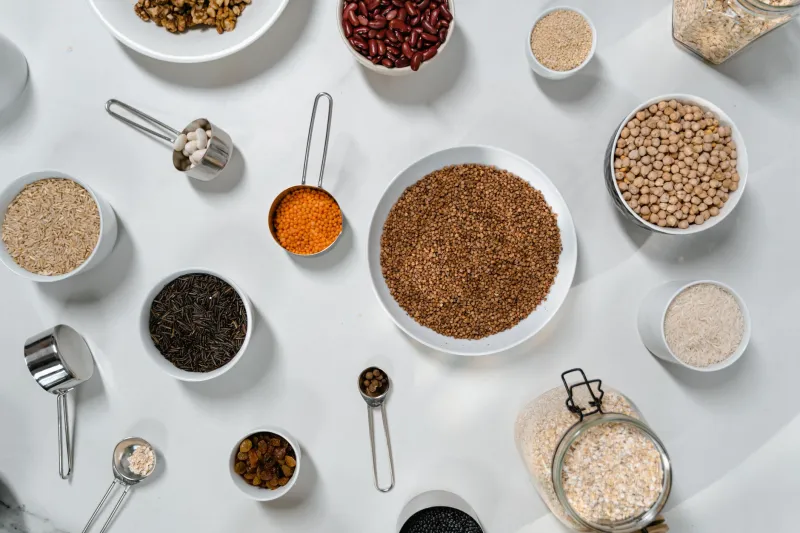
Whether $40 is a hardship or a stunt depends entirely on where you stand. But for a surprising number of people who've tried the week, the real discovery had nothing to do with the price tag. It's that the cheapest food in the store — beans, oats, cabbage, rice — happens to be the food that teaches you to cook. And learning to cook, it turns out, changes a lot more than dinner.