She Fought for the Cake, Not the House: Inside the Stranger-Than-Fiction World of Divorce Food Clauses
Marisol Vega's attorney thought she was joking.
The house? Fine, his client would negotiate. The retirement accounts? Take what you're owed, split the rest. But when the settlement draft came back with no mention of what Marisol actually cared about, she sent it back with a handwritten note in the margin: What about the cake?
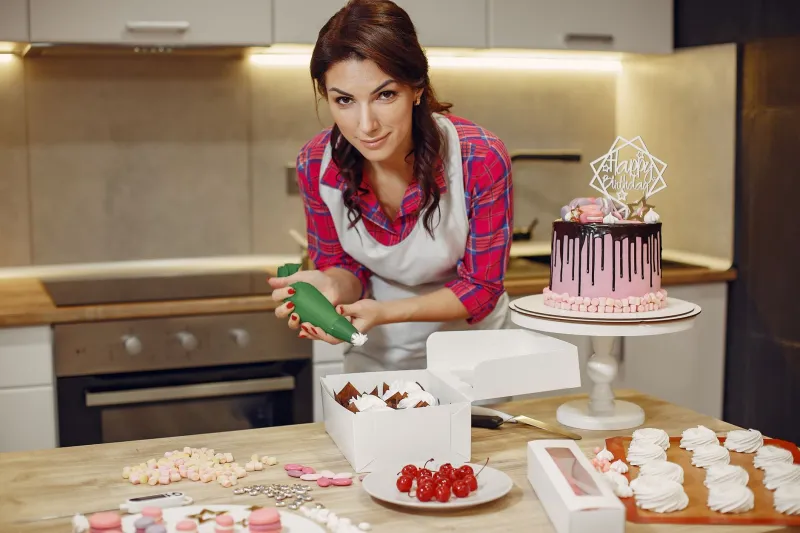
The cake in question — a lemon-raspberry layer cake with whipped mascarpone frosting — had been her signature for two decades. She'd baked it for her daughters' first birthdays and their sixteenth. For her mother-in-law's seventieth. For the block party on Delancey Street every July. When Marisol's marriage ended last spring, the recipe lived in a green binder in the kitchen of the house she was leaving, and she wanted, in writing, the right to take it.
Her lawyer, a twenty-year veteran of family court in Columbus, Ohio, told her he'd never drafted such a clause. Then he did it anyway. The final agreement includes a paragraph — buried between the vehicle titles and the tax filings — confirming that the recipe, in Marisol's handwriting, is her sole and separate property.
"People thought it was silly," Marisol told me over coffee, "until I explained what the cake actually was. Then nobody laughed."
The Foods We Can't Leave Behind
Marisol's story might sound like an outlier, but spend any time in the aftermath of a major life transition and you'll hear versions of it everywhere. The widower who can't part with his late wife's cast-iron skillet. The newly sober woman who keeps a bottle of vanilla on the counter like a trophy. The empty-nester father who still makes Sunday pancakes for two, even when it's just him.
Celebratory food occupies strange territory in our cultural imagination. We treat indulgence as the enemy of transformation — the thing you give up, the hurdle you clear, the willpower test you pass or fail. But for people rebuilding a life from scratch, these dishes often function less like temptation and more like load-bearing walls.
"Food is one of the most reliable memory anchors we have," says Dr. Elena Ruiz, a food therapist based in Austin, Texas, who works with clients navigating divorce, grief, and recovery. "Smell and taste connect to the brain's emotional centers faster than almost anything else. So when someone's entire identity gets upended — a divorce, a diagnosis, a kid leaving for college — the recipes they made in that life aren't just recipes. They're proof the person existed. Proof they were someone's mother, someone's partner, someone who showed up with a cake."
Ruiz draws a distinction her clients find useful: nourishment versus nostalgia. Nourishment, in her framing, is food that meets you where you are and supports where you're going. Nostalgia is food that keeps one foot planted in a life that no longer exists. The trouble, she says, is that the two get tangled up constantly — and the answer is almost never to throw everything out.
"The wellness industry loves a clean break," Ruiz says. "New year, new you, purge the pantry. But for a lot of people, transformation that requires amputation doesn't hold. The change that lasts is additive. You keep the cake. You just stop asking it to do a job it was never meant to do."
What the Cake Was Actually Doing
For Marisol, the lemon-raspberry cake wasn't about sugar. It was about being known for something.
"I married at twenty-four. I didn't finish college. I didn't have a career people asked about at parties," she says. "But I had that cake. When I walked in with it, people smiled before they even tasted it. For nineteen years, that was my thing. And somewhere in the divorce fog, I realized that if I let him keep the recipe — even accidentally, even by default — I'd be letting go of the one version of myself I actually liked."
There's a term for this in the research literature: self-continuity — the sense that you are still, fundamentally, the same person across life's ruptures. Psychologists consider it a cornerstone of resilience. And food, it turns out, is one of the most accessible tools for maintaining it. A 2023 review in the journal Appetite found that food-related rituals and comfort dishes played a measurable role in emotional regulation during periods of upheaval, particularly among people who had limited other sources of stability.
The catch, Ruiz cautions, is honesty with yourself about what role the dish plays now. "I ask clients one question: When you eat this, do you feel more like yourself, or less? If the answer is more — keep it, unapologetically. If it's less — if the cake tastes like the marriage, if the casserole tastes like the funeral — then we work on honoring the memory without marinating in it."
Transformation Without Amputation
Here at Transformed By Food, we publish a lot of before-and-after stories. The before is usually heavy — literally or figuratively — and the after is lighter, brighter, stricter. And honestly, those stories matter. Sometimes the pantry purge is the breakthrough. Sometimes the food that's holding you back really is holding you back.
But Marisol's story complicates the script in a way I've come to believe is necessary. Her transformation didn't require her to renounce the cake. It required her to claim it — to decide, deliberately, what came with her into the next chapter and what stayed behind. The cake came. The resentment didn't.
She baked it for the first time as a single woman last October, for her younger daughter's birthday, in the small apartment she moved into after the sale of the house. The oven ran hot. She over-whipped the mascarpone and had to start the frosting over. It took four hours instead of two.
"Best cake I ever made," she says. "Because every single part of it was mine."
Ruiz puts it more plainly: "We've confused transformation with subtraction. But the goal was never to become a person with no history. The goal is to become a person who chose what to carry forward. Sometimes that's a green smoothie. Sometimes it's a birthday cake with your name on the recipe card. Both count."
Marisol's daughters, for their part, have already requested the cake for their own milestones — graduations, someday weddings, eventually grandchildren. The green binder now lives in Marisol's kitchen, and she's had the key page photocopied and notarized, half as a joke, half because divorce teaches you things about paperwork.
"My lawyer still brings it up at parties," she laughs. "The cake clause. He says it's the only term of the settlement nobody's ever tried to violate."
Some things, it turns out, are non-negotiable. And knowing which ones — that's not indulgence. That's identity.