Onions, Ego, and Second Chances: A Retiree Goes Back to Cooking School at 58
Ray Delgado's kitchen in Toledo, Ohio, was, by his own admission, a museum. The stove had barely been lit since the Reagan administration. The spice rack held salt, pepper, and a tin of paprika so old the label had faded to a ghost of itself.
"Thirty-five years, my wife Carol handled everything that came out of that room," Ray told me over a pot of soup he made — soup he made — while I sat at his kitchen table. "I handled the grill. That was my one contribution. Burgers on the Fourth of July. That was my show."
Then Carol passed away two winters ago, and Ray's museum became his responsibility.
The Drive-Thru Interregnum
For the first year, Ray did what a lot of newly single older Americans do: he outsourced his survival to a series of glowing menu boards. A Wendy's on Monroe Street knew his order by heart. The morning shift at a McDonald's two towns over started his large coffee when they saw his truck in the lot.
"I gained twenty pounds. My blood pressure went up. My doctor used the word 'prediabetic' and I heard 'pre-quiet,' you know? Like things were winding down," he said. "And I remember standing in that drive-thru lane thinking, Carol would be so embarrassed. Not because of the food. Because I'd given up on feeding myself."
What happened next wasn't a lightning-bolt transformation. It was a flyer at the public library, of all places. Introduction to Culinary Fundamentals — a non-credit evening course at the local community college. Fourteen dollars an hour for the instructor, all skill levels welcome.
Ray was 58. He signed up anyway.
The Oldest Student in the Room
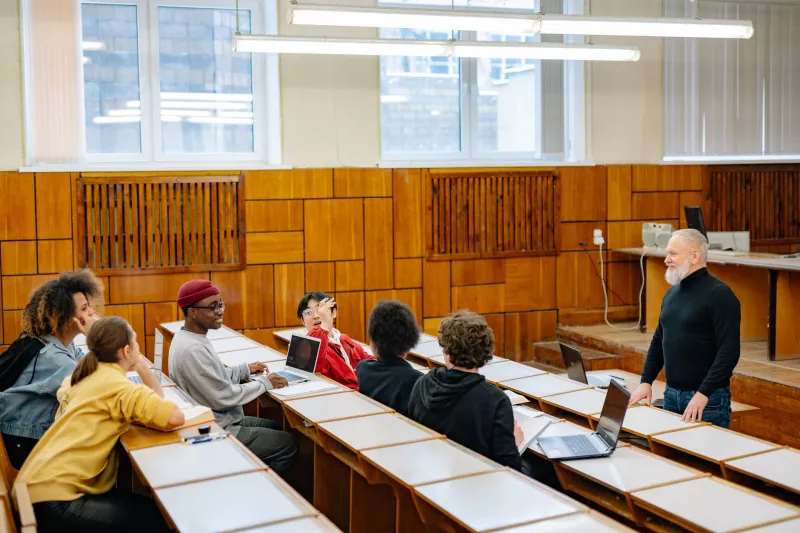
The class had sixteen people. Most were in their twenties — line cooks wanting to move up, a couple of college students, a young couple saving for a wedding who thought cooking together might be cheaper than therapy.
Ray was the only person in the room who qualified for the senior discount at Denny's.
"First night, I couldn't even dice an onion," he laughs. "There's a kid next to me, maybe 23, going chop-chop-chop like a machine. And here I am, tearing up, hacking away, holding the thing like it owes me money. I wanted to melt into the floor."
His instructor, a former restaurant chef named Denise Okafor, noticed him retreating into himself and pulled him aside during the break. What she told him became the hinge of Ray's whole experience:
"She said, 'You've raised kids, worked forty years, buried a wife. And you're embarrassed because a 23-year-old can dice faster than you?' She said, everybody in this room is a beginner at something. That's the whole point of the room.'"
What Nobody Tells You About Learning Late
There's a particular kind of courage required to be visibly bad at something in your late fifties. Ray describes it as "the opposite of everything I was taught." His generation of men, he says, was raised to fake competence, not build it.
But the kitchen turned out to be a surprisingly gentle teacher. Knife skills came in week three. By week six, he could make a roux without narrating his own anxiety. And something unexpected happened: the twenty-somethings adopted him.
"Marcus — the onion kid — he started calling me 'Big Ray.' He'd help me with technique, and I'd tell him about job interviews and how to talk to a landlord. He taught me mise en place. I taught him you don't have to answer your boss's texts at midnight. Fair trade."
The class ended with a potluck. Ray brought a chicken and dumplings — Carol's recipe, which he'd found in her handwriting and finally, after four months, felt ready to attempt. He says he cried a little at the stove and blames the onions, which everyone in the room, being cooks, understood perfectly.
A Quiet National Trend
Ray isn't an anomaly, even if he felt like one. Community colleges and extension programs across the country report growing enrollment in beginning cooking courses among adults over 50 — often called "late learner" or "second kitchen" classes. Some programs, like those in Michigan and North Carolina, have begun marketing directly to newly widowed or divorced older adults, partnering with senior centers and even grief counselors.
The logic is practical as much as emotional: cooking for one, managing a grocery budget after decades of dual incomes, and navigating nutrition on a fixed income are genuine skills — and loneliness is a documented health risk for older adults living alone. A weekly class where you chop beside other humans turns out to be good medicine.
Eighteen Months Later
Ray still eats at Wendy's occasionally. "The Frosty is not a moral failing," he insists. But his freezer now holds labeled containers of chili and red beans and rice. His blood pressure is down. His doctor, he says, "quit using the prefix on 'diabetic.'"
He also started a small Saturday thing with two classmates: they take turns hosting, each person cooking one dish and teaching the others. Marcus brings his girlfriend now. Ray makes the bread.
When I asked him what he'd say to another 58-year-old staring down a kitchen they've never used, he didn't hesitate.
"It's not too late to learn a second language," he said. "And the kitchen's the easiest one there is. Everything in it is already trying to tell you the truth."
Then he ladled me out a bowl of that soup, and for the record: it was very good.